
Define scope
Record assemblies, finish, access, repairs, texture, and protection.
Drywall estimating
Build scope for hanging, finishing, repairs, texture, access, and protection with rates your company can defend.
Where estimates go wrong
Record assemblies, finish, access, repairs, texture, and protection.
Inspect board, finishing, linear accessories, waste, and labor.
Validate the company cost basis and publish a clear client scope.
Example workflow
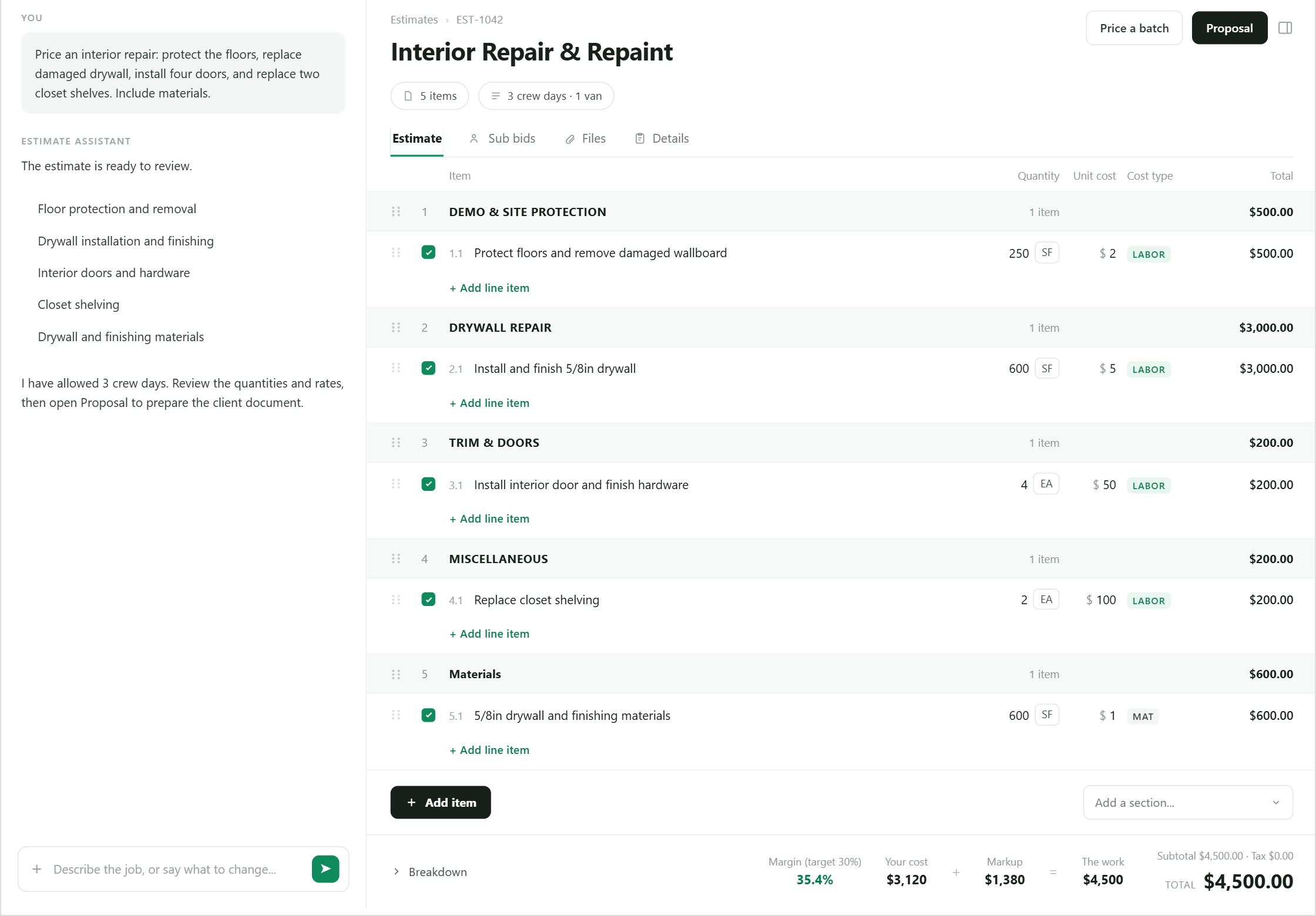
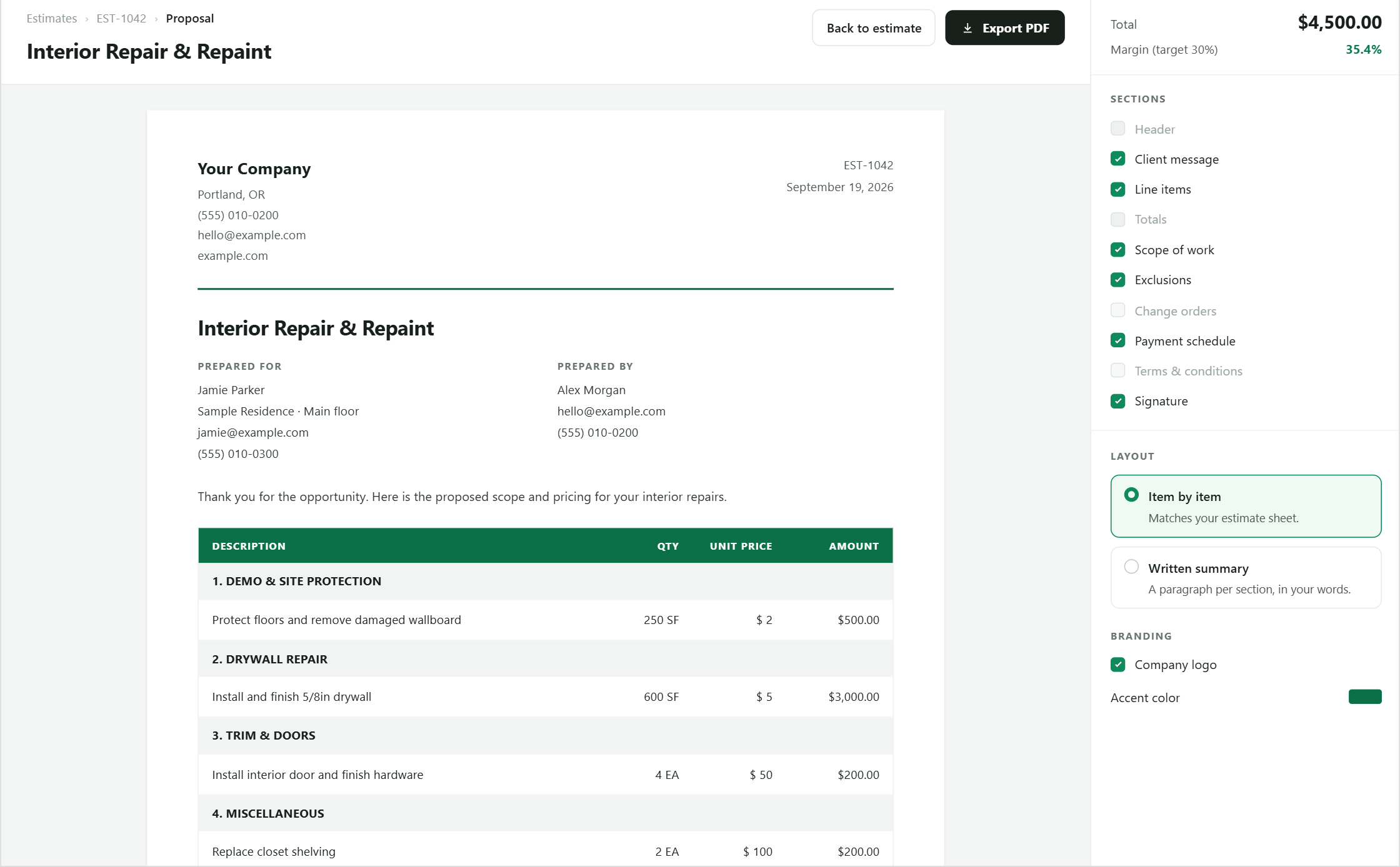
Carry board, finish, corner bead, patches, texture, protection, and mobilization as visible scope—not a hidden lump sum.
Why it matters
Finish level, patches, height, access, bead, texture, mobilization, and occupied conditions all change labor and cost.
How it works
Each step stays visible, editable, and connected to the same job.
Capture board, layers, finish, height, access, and repair conditions.
Keep area, linear items, openings, waste, and production editable.
Use your labor, material, mobilization, and minimum-charge rules.
Present a clear scope with finish and exclusion language.
Built into the workflow
Support common board, compound, tape, and quantity planning.
Keep labor, material, quantities, and rates open for review.
Measure the proposed price against the crew and duration behind it.
Carry forward minimums, finish assumptions, and repair conventions.
Keep exploring
Questions
Straight answers about how this part of BidPilot works.
Yes. Scope, quantities, labor, materials, and rates remain editable as separate line items.
Yes. Add them to your pricing and save reusable company guidance for when those rules apply.
Start free and teach BidPilot the rest as you work.