
Collect and organize
Bring the available job information into an editable estimate.
General contractor estimating
Bring job information, company pricing, internal labor, cost basis, and proposal presentation into one workflow for the painting and finish work your crews carry.
Where estimates go wrong
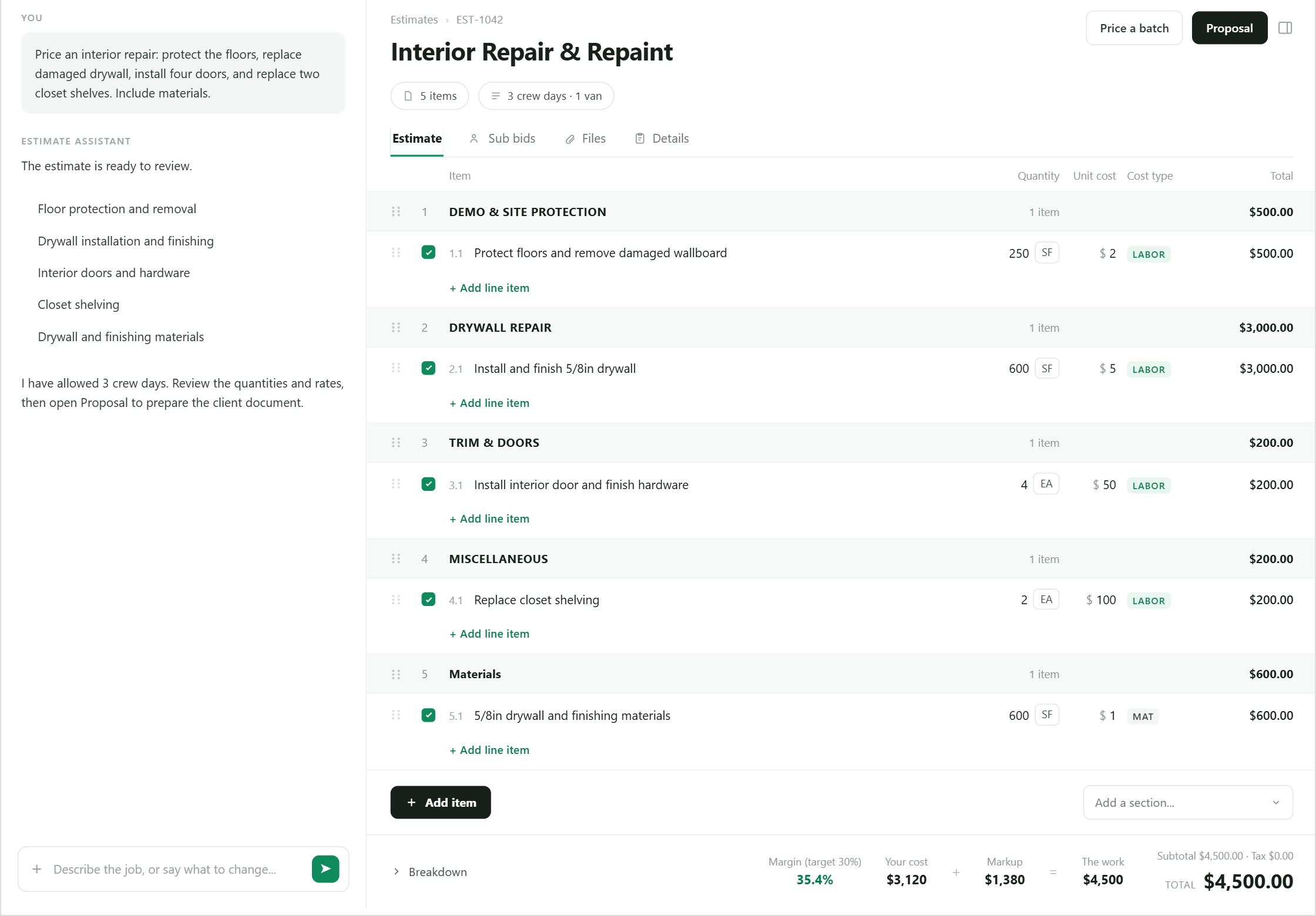
Bring the available job information into an editable estimate.
Use company labor, pricing history, and financial cost basis.
Resolve gaps, check margin, and publish the approved proposal.
Example workflow
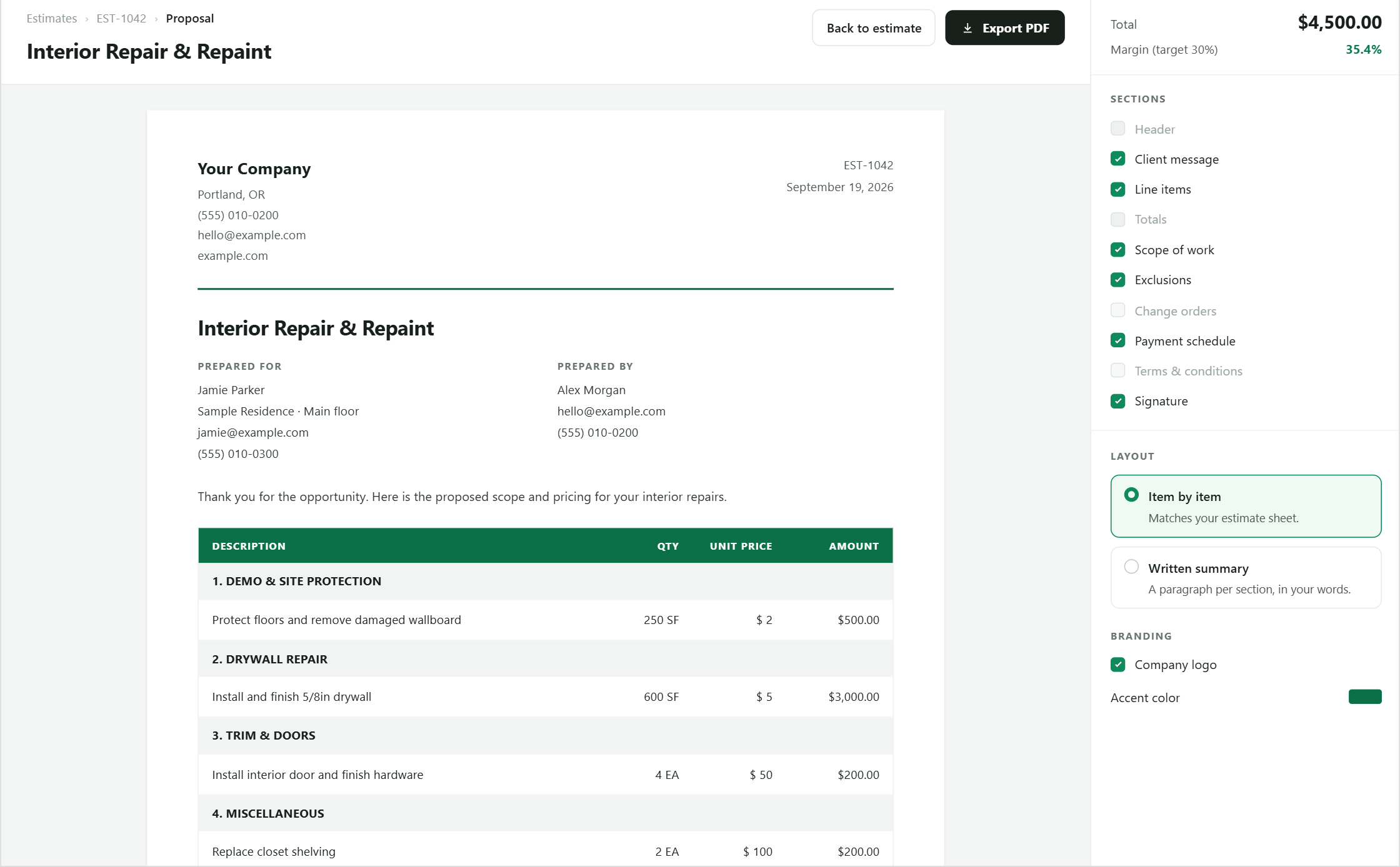
Keep self-performed labor, material, overhead, and exclusions visible through approval, with subcontractor quotes carried as their own lines.
Why it matters
General contractors need to see what a self-performed scope actually costs against real crew capacity, not a rough number carried at a flat markup.
How it works
Each step stays visible, editable, and connected to the same job.
Bring notes, files, photos, prior estimates, and pricing into the job.
Build out materials, labor, and any subcontractor quotes you want carried in the same total.
Review cost basis, duration, overhead, markup, and resulting margin.
Create a branded client document from the approved estimate.
Built into the workflow
Add sections and line items for the work you carry, including a subcontractor quote as its own line.
Connect payroll, overhead, owner pay, burden, and capacity to job margin.
Start from current sheets and prior work instead of a blank catalog.
Keep recurring scope, pricing, and proposal conventions.
Keep exploring
Questions
Straight answers about how this part of BidPilot works.
No. BidPilot is focused on estimating, company pricing, margin, and proposals rather than scheduling every part of job operations.
Not yet — BidPilot is built around the painting, drywall, and finish scope you self-perform. You can still add a subcontractor quote as its own line so it is carried in the total and margin, without a dedicated trade breakdown for it.
Start free and teach BidPilot the rest as you work.